The Speed of Light: Understanding One of the Universe's Greatest Constants
Introduction
The speed of light is one of the most fundamental constants in physics, governing the way information and energy move through the universe. It is the cosmic speed limit, a value that underpins theories of space, time, and relativity. But what exactly is the speed of light, how was it measured, and why does it matter so much in science and technology? In this article, we will explore these questions in depth, providing a clear and engaging explanation of this crucial concept.
What is the Speed of Light?
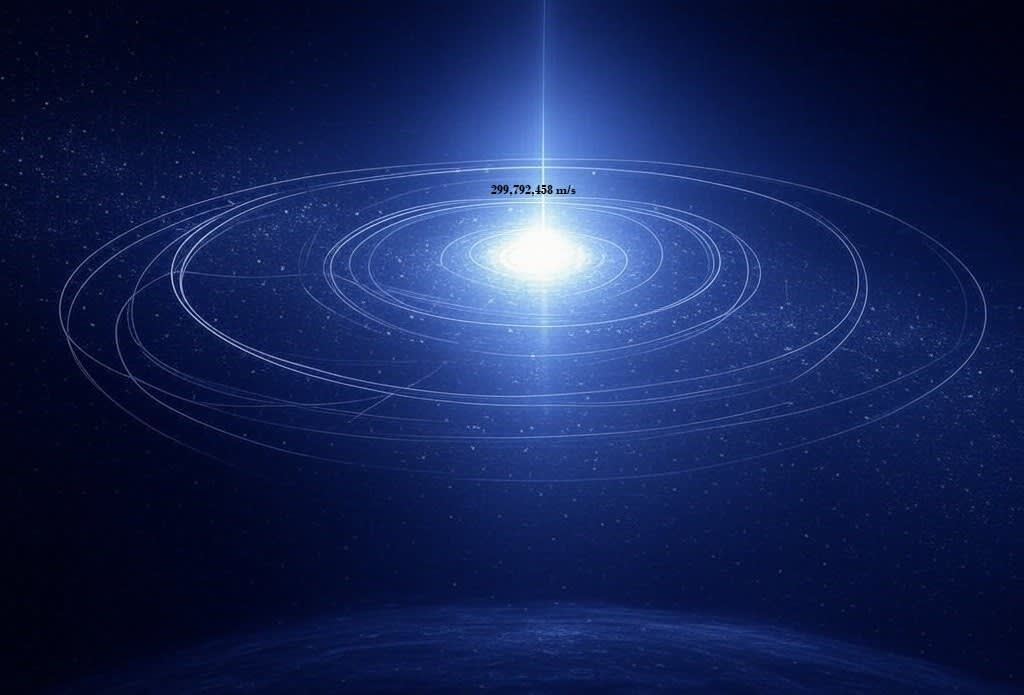
The speed of light in a vacuum is exactly 299,792,458 meters per second (approximately 186,282 miles per second). This value is denoted by the letter c and plays a crucial role in modern physics. It was established as a fundamental constant by the International System of Units (SI) and is used to define the meter.
However, light does not always travel at this speed. When it moves through different media such as water, glass, or air, it slows down due to interactions with particles in the medium. The speed of light in a medium is determined by the material's refractive index—the higher the index, the slower light travels.
How Was the Speed of Light Measured?
The quest to measure the speed of light dates back centuries. Early philosophers, such as Aristotle, believed that light traveled instantaneously. However, scientific advancements revealed that light has a finite speed. Here are some key milestones in measuring it:
Ole Rømer’s Astronomical Observation (1676): Danish astronomer Ole Rømer was the first to estimate the speed of light by observing the moons of Jupiter. He noticed delays in their eclipses, which he attributed to the varying distance between Earth and Jupiter.
Fizeau’s Experiment (1849): French physicist Hippolyte Fizeau used a rotating toothed wheel and a beam of light reflected by a mirror to make a more precise measurement.
Michelson’s Experiments (1879-1926): Albert Michelson refined these measurements using rotating mirrors, leading to the most accurate determination of the speed of light before the era of modern physics.
Why is the Speed of Light Important?
1. Relativity and Space-Time
The speed of light is at the core of Einstein’s Theory of Relativity. According to special relativity, nothing can travel faster than light. The famous equation E = mc² shows how energy and mass are related through the speed of light, revolutionizing our understanding of the universe.
2. Defining Distance in Space
The vast distances in space are measured in terms of light travel. The term light-year represents the distance that light travels in one year—about 5.88 trillion miles (9.46 trillion kilometers). This helps astronomers measure distances to stars, galaxies, and other celestial objects.
3. Technological Applications
The speed of light is crucial in various modern technologies, including:
Fiber-optic communication: Internet and telephone networks rely on light signals traveling through glass fibers at high speeds.
GPS technology: Global Positioning Systems depend on precise time calculations using light-speed signals from satellites.
Medical Imaging: Technologies like laser surgery and optical coherence tomography (OCT) rely on light's properties.
Can Anything Travel Faster Than Light?
According to our current understanding of physics, nothing with mass can exceed the speed of light. However, theoretical concepts such as tachyons (hypothetical faster-than-light particles) and warp drives (a concept from science fiction that bends space-time) suggest that there might be ways around this limit. Scientists continue to explore the mysteries of space-time, but for now, the speed of light remains the ultimate speed barrier.
Conclusion
The speed of light is more than just a number—it is a fundamental principle that shapes our understanding of the universe. From relativity and space travel to everyday technologies, it influences various aspects of science and engineering. As research continues, new discoveries may challenge our current understanding, but for now, light remains the fastest thing in the known universe.
Understanding this cosmic speed limit not only deepens our appreciation of physics but also fuels curiosity about the nature of reality itself. The next time you turn on a light, remember that you're witnessing one of the most remarkable phenomena in the universe at work!


Comments
Post a Comment