Dark Matter and the Multiverse: Could Hidden Universes Explain the Unseen Cosmos?
Introduction
What Is Dark Matter?
Scientists have been puzzled by dark matter for nearly a century. In the 1930s, Swiss astrophysicist Fritz Zwicky noticed that galaxies in the Coma Cluster were moving too fast. There had to be extra unseen mass providing gravity to keep them together. He called this hidden mass "dark matter."
In the 1970s, astronomer Vera Rubin added more proof. She discovered that stars at the edges of galaxies were moving at the same speed as those near the center. According to known physics, this shouldn't happen. The only explanation was that an invisible substance—dark matter—was pulling them with its gravity.
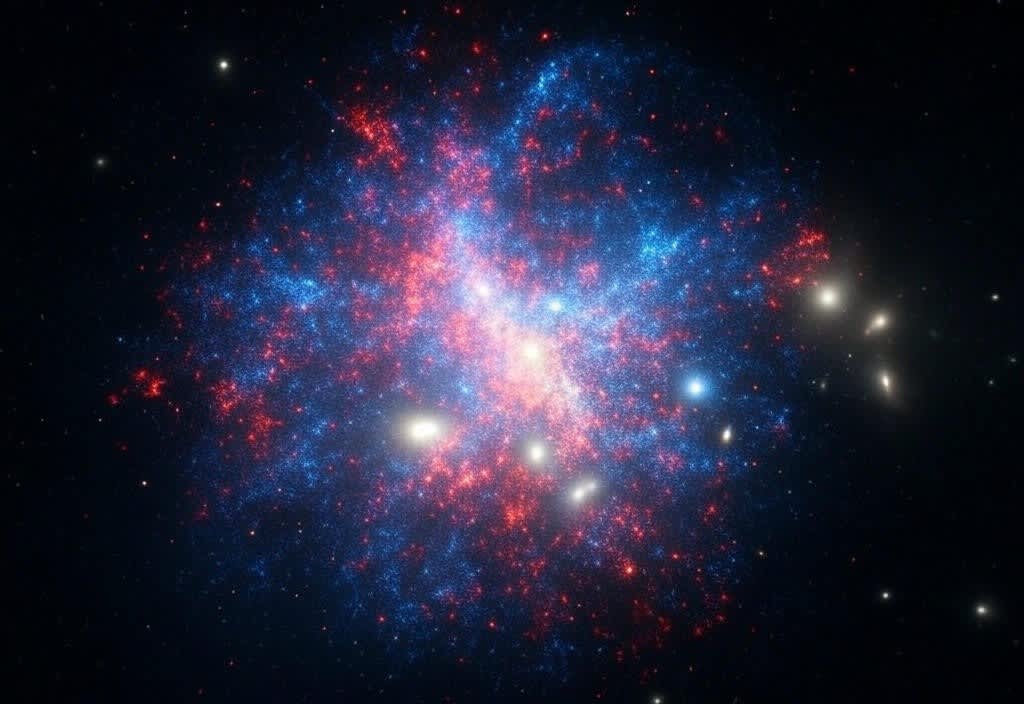
The strange thing about dark matter is that it does not emit, absorb, or reflect light. We can only detect it through its gravitational effects. This makes it one of the biggest unsolved mysteries in science.
How Could the Multiverse Explain Dark Matter?
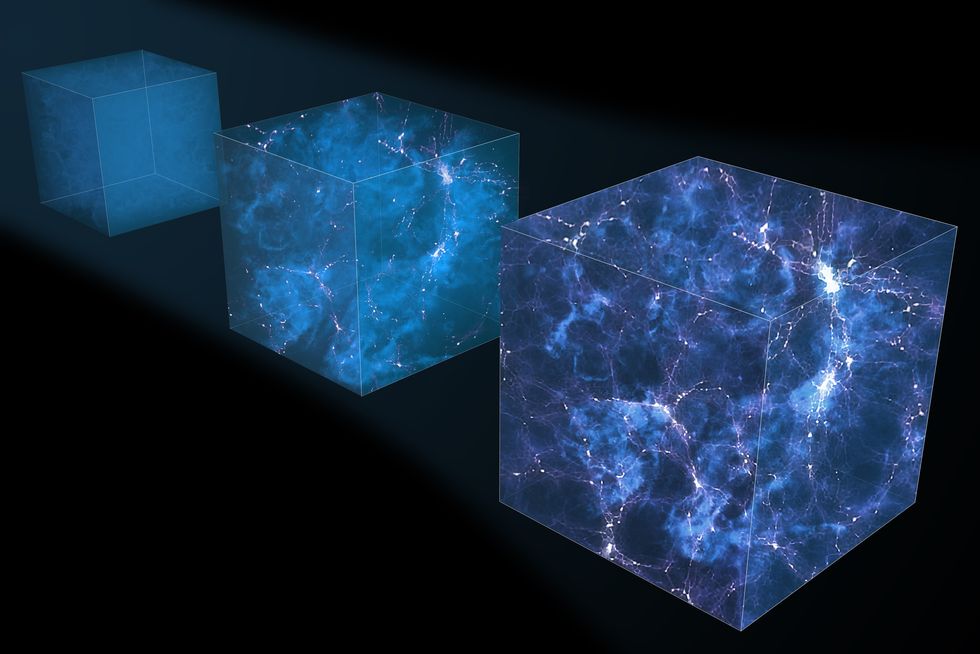
The multiverse theory suggests that our universe is just one of many, each with its own set of physical laws and particles. But how does this connect to dark matter? There are a few interesting possibilities:
Dark Matter Might Be Particles from Another Universe
Some scientists think dark matter could be made of particles from a parallel universe. These "shadow particles" may not interact with regular matter except through gravity, making them invisible to us.Dark Matter Could Exist in Extra Dimensions
String theory suggests there might be hidden dimensions beyond the ones we experience (length, width, height, and time). Dark matter could exist in one or more of these extra dimensions, explaining why we can't see it.
Some theories suggest that gravity from a parallel universe could be spilling into ours. If true, dark matter might actually be the gravitational pull of another universe.

Questions to Think About
To make this topic more engaging, here are some important questions and simple explanations:
1. If dark matter comes from another universe, why can’t we see it?
Dark matter does not emit or absorb light, making it invisible to telescopes. If it comes from a parallel universe, it might only interact with ours through gravity. That would explain why we can feel its effects but not see it.
2. Could dark matter actually be regular matter in another universe?
Some scientists think dark matter might be normal matter in a parallel universe. If multiple universes overlap in some way, their gravity could influence our universe, making dark matter seem like an invisible force.
3. Are there any experiments that could prove a link between dark matter and the multiverse?
While no experiment has confirmed this idea yet, scientists are exploring:
Gravitational wave studies to detect disturbances from hidden dimensions.
Dark matter detection projects like Xenon1T and LUX-ZEPLIN.
Particle collider experiments at the Large Hadron Collider (LHC), searching for unknown particles linked to dark matter or other dimensions.
4. How does the multiverse fit into modern physics?
The idea of multiple universes comes from theories like string theory and quantum mechanics. While it is still controversial, many scientists believe it could explain some of the strange things we observe in physics.
Scientific Clues That Support the Idea
Although we haven’t proven the connection between dark matter and the multiverse, some scientific observations suggest it’s possible:
Gravitational Lensing: Light from distant galaxies bends due to invisible mass. The amount of bending suggests there is more matter than we can see. If this hidden mass comes from another universe, it could explain dark matter.
The Cosmic Microwave Background (CMB): The afterglow of the Big Bang has tiny temperature changes that hint at unseen matter. Some scientists think these changes could be caused by interactions with other universes.
Strange Cosmic Rays: Some high-energy particles detected in space don’t fit known physics. They might be signs of dark matter or even particles moving between universes.
Challenges and Doubts
Even though this idea is exciting, there are some major challenges:
No Direct Evidence: Scientists can measure the effects of dark matter, but they have not yet detected a dark matter particle.
Alternative Theories: Some researchers think dark matter might not exist at all. They believe changes to gravity (such as MOND—Modified Newtonian Dynamics) could explain the strange movements of galaxies.
The Problem with the Multiverse: The multiverse is still a theory. Because parallel universes would exist beyond our reach, proving they are real is extremely difficult.
The Future of Dark Matter and Multiverse Research
Scientists are working hard to understand dark matter and its possible connection to other universes. Some important research includes:
Dark Matter Detection: Experiments in underground labs like Xenon1T and LUX-ZEPLIN try to capture dark matter particles.
Particle Collider Experiments: The Large Hadron Collider (LHC) at CERN searches for new particles that might be linked to dark matter.
Advanced Space Telescopes: The James Webb Space Telescope and upcoming Vera C. Rubin Observatory will provide new data on dark matter’s distribution in space.
At the same time, physicists are developing new theories and experiments to test the multiverse idea. Future breakthroughs in quantum physics, gravity research, and string theory could bring us closer to solving this mystery.
Conclusion
The idea that dark matter could be connected to the multiverse is both exciting and mysterious. While we don’t have solid proof yet, the possibility that unseen universes affect our own is an exciting field of study. If true, it would completely change how we understand reality.
For now, dark matter remains one of the biggest mysteries in science. Whether it comes from parallel worlds or represents a new kind of physics, solving this puzzle will change the way we see the universe.
Stay tuned for more discoveries as we explore the secrets of the cosmos!


Comments
Post a Comment